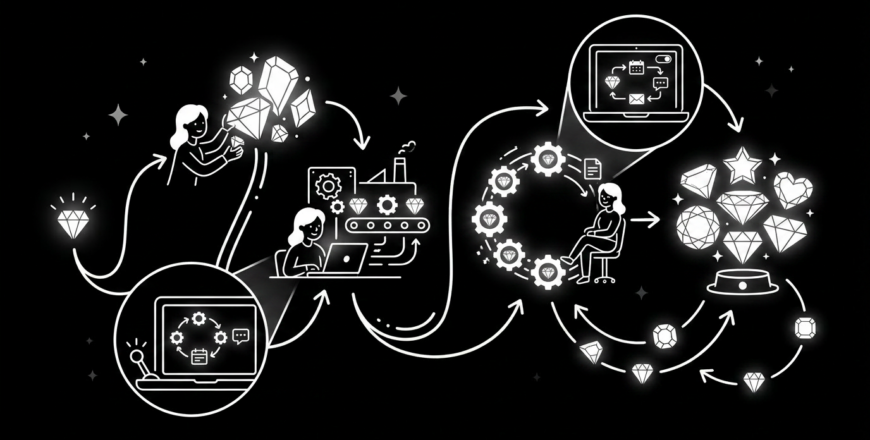
This course teaches you how to use AI for administrative work without handing over the parts of your business that depend on judgement, accuracy, and trust. Rather than focusing on any single tool, it teaches a way of thinking: how to design a workflow as a chain of steps, decide which steps to automate, which to assist with AI, and which to keep firmly human.
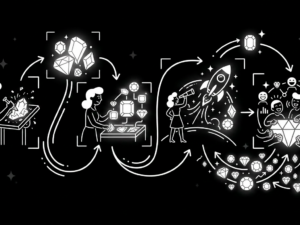
You learn through two realistic case studies. The first follows a gallery owner launching a new collection who wants an automated, segmented email campaign. The second follows a five-person artist collective that wants consistent social media posting and a way to turn unused video into searchable blog content. Across these, you build a repeatable method: name the problem in one sentence, place a human gate at every irreversible or relationship defining step, and separate what should be automated from what should not.
The course also examines how a workflow fails when the human gate is removed, introduces a decision tool called the automation quadrant, and provides a reference map of the tools that fit each layer of a workflow. Every lesson closes with a summary and a five-question comprehension check that must be passed before the next lesson unlocks. The course ends with a twenty-question final assessment, and a downloadable workflow design checklist gives you a practical tool to apply the method to your own work.
Subscribe to get the latest posts sent to your email.

This course teaches a decision-making framework for using AI in administrative work.
The tools named in the lessons are examples used to illustrate each step, not endorsements, and tool features and pricing change over time. Always apply your own judgement, keep a human review step before any irreversible action, and follow the data protection and privacy rules that apply to your business.
Learn how to put AI to work on administrative tasks while protecting the judgement, accuracy, and relationships your business depends on. Through two creative business case studies, you build a repeatable method for deciding what to automate, what to assist with AI, and what to keep human. Each lesson includes a comprehension check, and the course ends with a final assessment and a downloadable checklist you can use on your own work.
No prior experience with AI, automation, or coding is required.
A computer or tablet to view the course.
One real administrative task from your own work to apply the method to, recommended but not required.
Optional: access to tools you already use, such as an email platform, a CRM, or a scheduler, if you want to act on the workflows during or after the course.
Owners of small creative businesses, including galleries, studios, collectives, and independent practices.
Freelancers and solo founders who handle their own administration.
Artists and creative teams who want consistent marketing without hiring staff.
Anyone doing repetitive administrative work who is considering AI and wants a responsible, practical framework rather than a tool tutorial.
Complete beginners, as well as intermediate users who want a clear decision framework they can reuse.
You cannot copy content of this page