
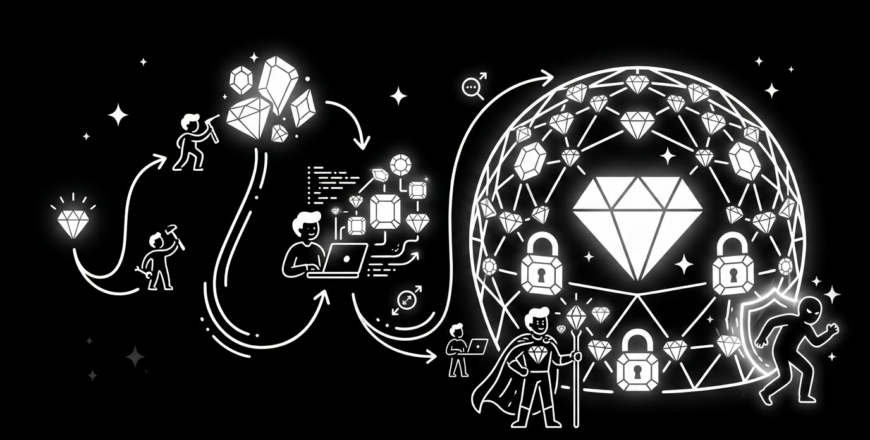
This course teaches creative entrepreneurs, founders, and cultural leaders how to understand what AI can and cannot do to creative practice, how to answer the arguments used to defend shallow AI content, and how to keep AI on the liberating side of the line rather than the eroding one. Learners identify the difference between channels that die and practices that survive, learn to use the object versus direction distinction to defend depth without sounding elitist, and audit their own AI workflows using a three-level framework.
The course is structured across two sections: Understanding the Shift (Lessons 1.1–1.2) and Working With AI Without Losing Yourself (Lesson 2.1). Three lessons move from historical pattern recognition to argument fluency to practical workflow audit, with each lesson containing a teaching body, a summary, and a five-question comprehension check. The course ends with a twenty-question final assessment and a downloadable Creative Practice Survival Audit checklist for quarterly use.
Learners complete the course with a named constraint turned into a creative direction, language to defend depth in professional settings, and a labelled audit of every AI workflow they currently use.
Subscribe to get the latest posts sent to your email.

This course provides strategic and conceptual frameworks for understanding AI's impact on creative practice. References to research on cognitive offloading and skill formation are cited as context drawn from publicly available academic and industry sources. The landscape of AI tools and capabilities changes rapidly; learners are encouraged to apply these frameworks to their current toolset rather than to specific platforms or products that may have changed since this course was written.
AI is both a channel and a practice. As a channel it will rise and fall like all the others. The real question is whether it kills the practice of creativity itself. The answer is that creativity survives the way it always has: by becoming what the new technology cannot be. This course gives you the framework to understand how, the language to defend it, and the workflow discipline to keep building depth instead of eroding it.
Founders and entrepreneurs in the creative sector who want to understand what AI changes and what it does not
Creative leaders, directors, producers, and curators navigating AI adoption decisions for their practice or organisation
Community builders and cultural workers who want to protect the depth of their work while using new tools
Any creator who has felt the pull toward AI-led work and wants a framework for deciding when that serves them and when it does not
You cannot copy content of this page